Want to be in the loop?
subscribe to
our notification
Business News
TRANSPARENCY AND ACCOUNTABILITY
Getting better
Many successful M&A transactions between Maritime Bank and Mekong Development Bank (MDB), Joint Stock Commercial Bank for Investment and Development of Vietnam (BIDV) and Mekong Housing Bank (MHB), and Sacombank and Southern Bank have occurred.
The M&A of BIDV and MHA completed in May, 2015 is rated as a "tiger grows wings" deal. The M&A has increased the total asset of the BIDV to over VND700 trillion, the charter capital to over VND34 trillion; the network has been expanded to nearly 1,000 units across the country, with a total workforce of 24,000 employees.
The M&A of the Maritime Bank and the MDB has taken the mutual advantages of the resources for their comprehensive development. After the M&A, the Maritime Bank has total assets amounted to VND111,753 billion and the charter capital of VND11,750 billion, with a network of 300 transaction units. Maritime Bank has been at top five financial institutions, with largest charter capital, and at top ten commercial banks, with largest trading networks. Similarly, after the merger with the Southern Bank, Sacombank is at the top 5 largest banks of Vietnam, with total assets of VND297,184 billion and the equity of nearly VND24, 506 billion, with the network of 563 transaction units across the country and Laos and Cambodia.
The shareholders get benefits from the M&A banks because the share price has increased and the prestige of the banks becomes much better than before.
The most decisive but controversial action of the SBV of its operational history is its acquisition of the shares of the three credit organisations, including the VNCB, the Ocean Bank and the GP Bank. The shareholders of the acquired banks earn nothing from the M&A and many leaders of such the banks have been jailed. Mr Le Xuan Nghia, Director of the Business Development Institute assessed that the Bank Restructuring Programme is among the toughest restructuring programmes, taken with blood, tears and even imprisonment.
Mr Nghia explained that the banks acquired at zero VND is due to its irrecoverable debt, exceeding many times its own capital. It is said that the former leaders of such the banks daily and hourly made use of the local deposits for their own interests. If this information leaked out, the banking deposits will be withdrawn and none of clients could forgive this violation. The SBV's acquisition of the banks at zero VND is to limit the inter-banking negative impacts to ensure the general stability of the system and the entire economy. The banks acquired at zero VND is featured only in Vietnam; other countries never embrace weak banks and leave them for bankruptcy.
The good news is that in the early 2016, the report of big banks that have been merged with the weak banks have positive reports, particularly the resolution of the bad debts. Hopefully, these banks will be bigger and stronger, and not only in terms of scale.
Despite the huge success of the M&A, the restructuring of the banking system has not reached the goal. The World Bank has reviewed that the consolidation of the banking sector has accelerated since first half of 2015, mainly through the compulsive M&A of the banks. Although the number of M&As has increased, the target of reducing the number of commercial banks to 15-17 in 2017 may be difficult. Currently, there are 34 banks after eight M&As. There were 42 commercial banks prior to the implementation of the restructuring of the banking sector.
More transparent and healthier
The restructuring of the banking system requires transparency of information and restriction of the cross-ownership and manipulation of the large shareholders.
According to the report by the Asian Development Bank (ADB), the level of the openness and transparency of Vietnamese enterprises are ranked near the bottom, behind Indonesia, Malaysia, the Philippines, Singapore and Thailand.
Recently, one of the most recent debates is the bad manners of the leaders of the Agribank who have withdrawn thousands of billion invested in the "unknown" projects. This raised a question about the obscurity and lack of information transparency of the banks.
The Vietnam Accounting Standards (VAS) also has many differences compared to the standard system of preparation and presentation of the International Financial Report System (IFRS). The shortcomings of the VAS have revealed the statistics of the NPL ratio in the banking sector that is adjusted too frequently.
The transparency is a requirement as well as a way for a stable development of the bank. This will help build the reputation to the investors and help the unlisted banks better prepare for their stock listing.
Another problem is that the SBV is facing with the cross-ownership. The process of the cross-ownership of the banking system is accelerated through the transfer process, divestment, and M&A of the banks. This has been reviewed by Governor Nguyen Van Binh about the ownership and public transparency of commercial banks.
Source: VCCI
Related News
VIETNAM ECONOMY INVESTMENT
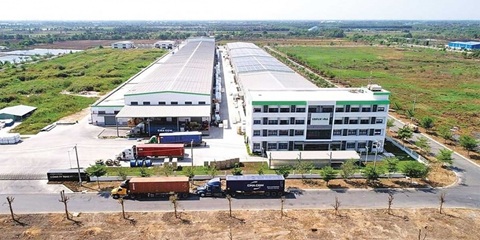
FOREIGN INVESTORS SEEKING A SYNCHRONISED MANUFACTURING ECOSYSTEM
Instead of focusing only on land costs and incentives as usual, foreign investors are seeking a synchronised manufacturing ecosystem, from stable power supply and logistics to shared infrastructure and the convenience of completing residence procedures for experts to serve their long-term investment in the country.
INFRASTRUCTURE / CONSTRUCTION / LOGISTIC / PORT
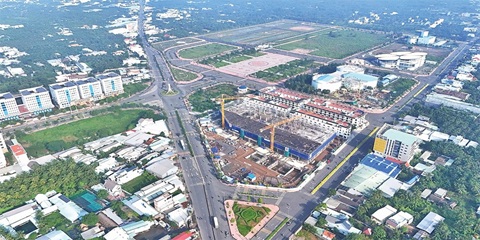
DONG THAP PROVINCE STEPS UP INDUSTRIAL EXPANSION AND INFRASTRUCTURE CONNECTIVITY
Accelerating public investment, strengthening inter-regional connectivity, and expanding industrial land are helping Dong Thap efficiently bolster competitiveness and drive economic growth. Following the 2025 merger of the former Dong Thap and Tien Giang provinces, the expanded Dong Thap province in the Mekong Delta faces mounting pressure to accelerate infrastructure development and strengthen connectivity among local economic zones, urban areas, industrial parks (IPs), and production centres.
PROPERTY / INDUSTRIAL ZONE
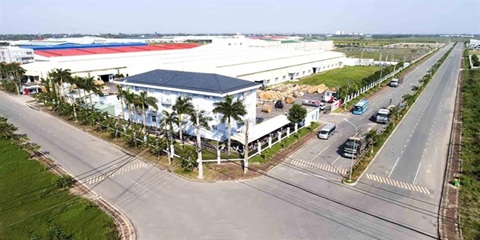
HCM CITY ATTRACTS US$5.7 BILLION INTO EXPORT PROCESSING AND INDUSTRIAL ZONES
HCM City attracted US$5.7 billion in domestic and foreign investment into its export processing and industrial zones during the first nine months of 2026. The figure exceeded the city's full-year target by 31 per cent, highlighting strong momentum in high-quality industrial investment under Resolution No.10-NQ/TW. Total investment reached 131 per cent of the 2026 target of $4.25 billion and represented a 29 per cent increase compared with the same period in 2025, according to the city's Export Processing and Industrial Zones Authority (HEPZA).

BANKING / FINANCE / INSURANCE / TAX
REMITTANCES TO HCM CITY RISE NEARLY 40% IN Q3
Remittances to HCM City reached more than US$2.83 billion in the third quarter of this year, up 39.5 per cent from the previous quarter and 3.6 per cent year-on-year. This was the first quarter showing positive annual growth this year, helping narrow the decline in remittance inflows over the first nine months. According to the State Bank of Vietnam (SBV)’s Regional Branch 2, remittances transferred to HCM City through credit institutions and economic organisations totalled $2.835 billion in Q3, an increase of more than $802 million from the previous quarter.
VIETNAM ECONOMY INVESTMENT
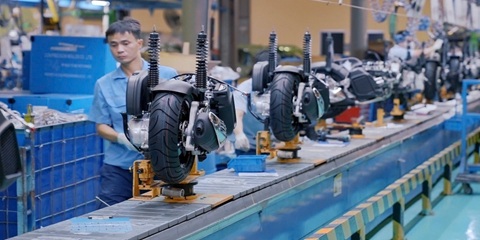
LOCALITIES REPORT BREAKTHROUGH RESULTS IN FDI IN FIRST NINE MONTHS
In Ho Chi Minh City, total registered capital reached $17.2 billion in the first nine months, up 4.2 times from the same period last year. The figure included more than $9.35 billion in newly registered capital and over $4.9 billion in additional capital for existing projects. Foreign investors also registered more than $2.9 billion through capital contributions and share purchases.

TECHNOLOGY
TECH SECTOR GROWTH OPENS UP OPPORTUNITIES FOR VIỆT NAM TO GO GLOBAL
The growth of the electronics, semiconductor and high-tech sectors worldwide is opening up a variety of opportunities for Vietnamese enterprises to integrate more deeply into the global supply chain. However, to become suppliers for these corporations, domestic enterprises must meet rigorous standards regarding quality, technology, productivity and order fulfilment capabilities.
Events Sponsors






















